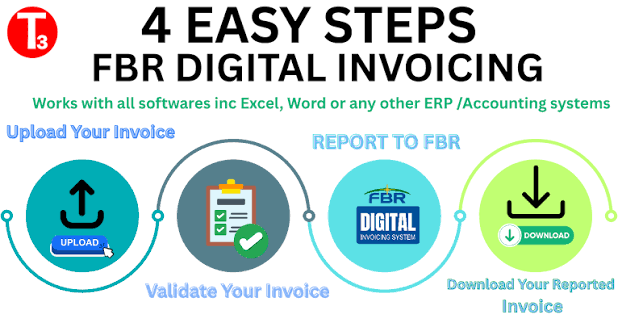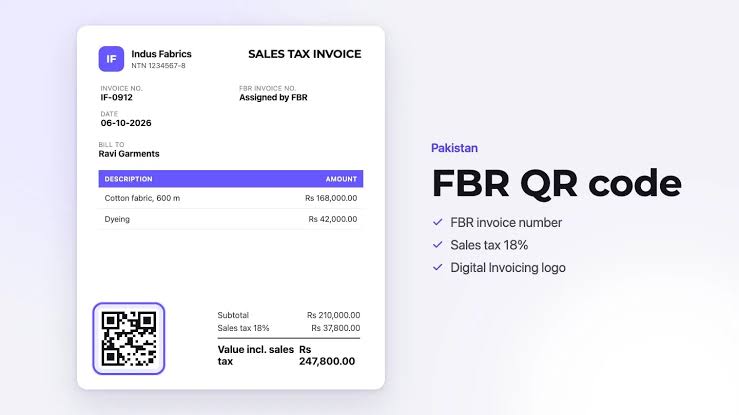
FBR digital invoicing requires registered businesses in Pakistan to create, validate, and report sales tax invoices through FBR’s electronic systems — typically the PRAL Digital Invoicing API using a token from the IRIS portal. The goal is accurate tax data, fewer manual errors, and invoices your buyers can verify with an IRN and QR code.
Who must comply?
If you are registered for sales tax — manufacturers, importers, wholesalers, distributors, retailers, and many service providers — you may already be in scope under notifications linked to SRO 709 and the Sales Tax Act. When in doubt, confirm your sector and registration status with your tax adviser and FBR guidance.
What the law expects from each invoice
- Correct buyer and seller NTN/registration details
- Line items with valid HS codes, quantities, and tax breakdowns
- Real-time or timely submission to FBR and storage of the official response (IRN, USIN, QR data)
- Ability to produce records for audit — PDF and exportable history
IRIS token and API integration
Your business generates a bearer token in IRIS for sandbox or production. Software such as FBR Digital Invoicing connects with that token so you validate invoices against FBR rules before submit, instead of re-keying data in multiple places.
Practical compliance workflow
- Test in sandbox with the invoice scenarios that apply to your business
- Fix validation errors using plain-language messages (wrong UOM, scenario, buyer province, etc.)
- Switch to production token when results are consistent
- Archive submitted invoices and PDFs for finance and audit
Start a free trial after admin approval, or read our IRIS token guide to prepare your integration.
FBR digital invoicing reference